TL;DR
Milan's essential sights cluster in a compact, walkable centre: the Duomo and its rooftop, the Galleria Vittorio Emanuele II, La Scala opera house, the Sforza Castle with Parco Sempione, the Brera art district, and Leonardo's Last Supper at Santa Maria delle Grazie — which you must book months ahead. Beyond the classics, the city rewards with the Navigli canals for nightlife and aperitivo, the Quadrilatero della Moda fashion district, modern Porta Nuova with the Bosco Verticale, and museums like the Pinacoteca di Brera and Pinacoteca Ambrosiana.
Two to three days covers the city comfortably. The Duomo is the anchor, the Last Supper is the one thing you must reserve far in advance, and Milan also makes an ideal base for day trips to Lake Como and Bergamo.
The five that define a Milan visit
Take these in order and you have walked the spine of the city. The first three are within a few minutes' walk of each other; the fourth is a short metro ride west; the fifth is the walk that ends your first afternoon.
1. The Duomo di Milano
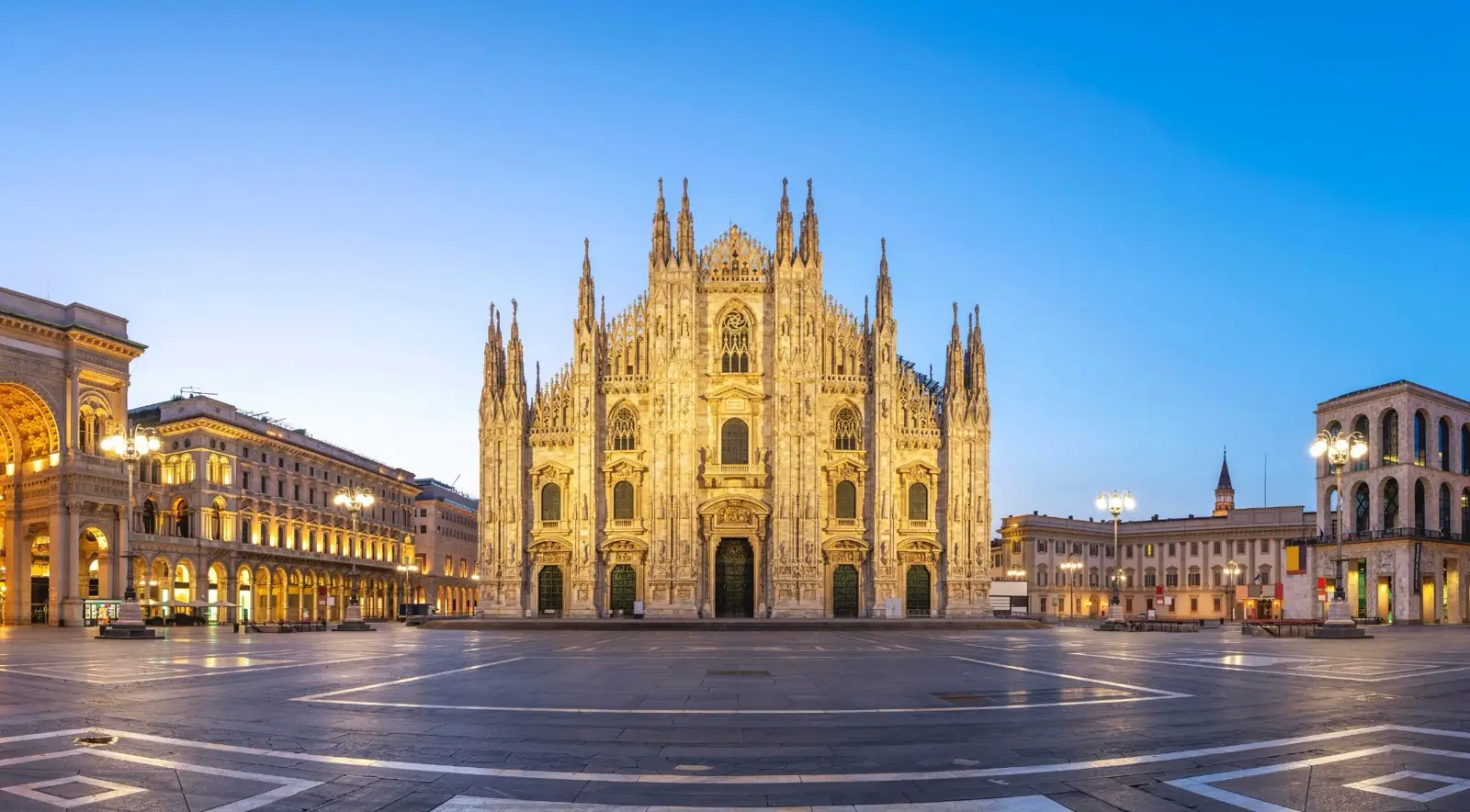
Milan's Gothic cathedral is the city's centrepiece — the largest church in Italy, bristling with 135 spires and topped by the golden Madonnina. Walk the vast marble interior, then go up to the rooftop terraces to stroll among the spires with views to the Alps. Tickets run from €10 (interior plus museum) to €32 for the Fast-Track all-access pass; book online and go early.
Our complete Duomo guide covers the whole five-site complex, the entrance fees guide has every 2026 price including the €36 Duomo + Ambrosiana combo that sits above the range quoted here, and the rooftop guide covers stairs versus lift. Our pick on GetYourGuide is the official Cathedral and Terraces entrance ticket — from $30, 4.6 from 72,087 reviews.
2. Galleria Vittorio Emanuele II
The glorious glass-roofed shopping arcade beside the Duomo, opened in 1867 — free to walk through, home to luxury flagships (including the historic Prada store), historic cafés, and the lucky bull mosaic where visitors spin their heel. It links the Duomo to Piazza della Scala, which is how you get from sight one to sight three — under glass for most of the walk.
Our full Galleria guide covers Mengoni's engineering, the 47-metre dome and the bull ritual.
3. Teatro alla Scala (La Scala)
The world-famous opera house on Piazza della Scala, opened in 1778. Even without a performance, the Museo Teatrale alla Scala lets you glimpse the gilded auditorium and see costumes, instruments and memorabilia. Booking a performance is a bucket-list evening for opera lovers, and one of the few things in this guide that is worth planning a trip's dates around.
Our pick on GetYourGuide: the Skip-the-Line Duomo & La Scala Museum Guided Tour — from $72, 4.4 from 201 reviews. That is a thin review base next to the Duomo tours on this page, so check recent feedback before booking.
4. Leonardo da Vinci's The Last Supper
Leonardo's fragile masterpiece covers a wall of the refectory beside Santa Maria delle Grazie, a UNESCO site. Only 40 people enter per 15-minute slot, so the €15 official tickets sell out months ahead. Reserve as early as you possibly can, or book a guided tour that holds its own allocation.
Our full Last Supper guide has the quarterly release calendar, the Wednesday-noon weekly top-up, and the guided-tour fallback for when the official site shows nothing.
5. Castello Sforzesco (Sforza Castle) & Parco Sempione
The vast 15th-century castle of Milan's ruling Sforza dynasty now houses museums whose single €5 ticket includes Michelangelo's unfinished Rondanini Pietà and Leonardo's Sala delle Asse. The courtyards are free, and behind the castle stretches Parco Sempione, Milan's central park, ending at the Arco della Pace.
Our pick on GetYourGuide pairs it with sight four: the Last Supper and Sforza Castle Guided Tour — from $138, 4.7 from 1,371 reviews.
Other experiences you might enjoy
Milan's booked experiences fall into four groups. Duomo tickets and rooftop terrace passes at Piazza del Duomo; Last Supper tours at Santa Maria delle Grazie, which are the reliable way in when the official allocation is gone; walking, e-bike and hop-on hop-off tours covering Sforza Castle, the Navigli canals, Brera and the Bosco Verticale towers at Porta Nuova; and food and aperitivo walks through the Brera and Navigli districts. The widget below shows live availability for these and other Milan experiences.
Five more you shouldn't skip
The first five are the reason people come. These five are the reason people come back, and they are what separates two days in Milan from one.
6. Pinacoteca di Brera & the Brera district
Milan's premier art gallery, in the bohemian Brera quarter, holds masterpieces by Raphael (Marriage of the Virgin), Caravaggio (Supper at Emmaus), Mantegna (Dead Christ) and Hayez (The Kiss). The surrounding cobbled streets, galleries and wine bars make Brera one of Milan's most charming areas for a stroll and an aperitivo.
7. Pinacoteca Ambrosiana
A short walk from the Duomo, this historic gallery and library holds Leonardo's Portrait of a Musician, Caravaggio's Basket of Fruit, Raphael's cartoon for the School of Athens, and pages from Leonardo's Codex Atlanticus. It is a quieter, quicker art fix than Brera — the right choice on a half-day.
8. The Navigli
Milan's atmospheric canal district south-west of the centre, lined with bars, restaurants and workshops. The Naviglio Grande and Naviglio Pavese come alive in the evening for the city's liveliest aperitivo scene, and they host a popular antiques market on the last Sunday of each month.
Our pick on GetYourGuide for reaching them: the City Highlights and Hidden Gems E-Bike Tour — from $45, 4.7 from 660 reviews — which takes in the Navigli, Sforza Castle and the Vertical Forest in one ride.
9. Quadrilatero della Moda (Fashion District)
The luxury shopping quadrilateral around Via Montenapoleone, Via della Spiga, Via Sant'Andrea and Via Manzoni — the global heart of Milanese fashion, and perfect for window-shopping, people-watching and design-house flagship stores whether or not you buy anything.
10. Porta Nuova & Bosco Verticale
Milan's striking modern quarter around Piazza Gae Aulenti, home to Italy's tallest tower (UniCredit) and the award-winning Bosco Verticale ("Vertical Forest") residential towers clad in trees. It is the counterpoint to the historic centre and a showcase of 21st-century Milan — worth the walk north for the contrast alone.
Beyond the top ten
Several of these are free, and two of them are the sort of thing you remember longer than the famous ones.
- Santa Maria delle Grazie — the Renaissance church, with a Bramante apse, beside the Last Supper. Free to enter, and you do not need a Last Supper ticket to see it.
- San Maurizio al Monastero Maggiore — "Milan's Sistine Chapel", covered floor to ceiling in frescoes. Free.
- Basilica di Sant'Ambrogio — the 4th-century church founded by St. Ambrose, and a Romanesque landmark.
- Basilica di San Lorenzo & the Colonne di San Lorenzo — Milan's oldest church and 16 ancient Roman columns standing in front of it.
- Cimitero Monumentale — an open-air gallery of elaborate funerary sculpture.
- Museo Nazionale della Scienza e della Tecnologia Leonardo da Vinci — Italy's largest science and technology museum.
- Fondazione Prada and Pirelli HangarBicocca — the city's leading contemporary-art spaces.
Practical tips
| Question | Answer |
|---|---|
| How many days? | Two to three covers the city; add days for the lakes and day trips |
| Getting around | The centre is very walkable; the Metro covers longer hops — single €2.20, 24-hour pass €7.60 |
| Book ahead | The Last Supper (months ahead) and the Duomo rooftop (days to weeks) — those two, and little else |
| Closure days | Many museums close Mondays (Brera, the Sforza museums, the Last Supper); the Duomo Museum closes Wednesdays, and so does the Ambrosiana |
| Dress code | Shoulders and knees covered for churches — the Duomo, Santa Maria delle Grazie and Sant'Ambrogio |
| Aperitivo | The quintessential Milanese ritual: a drink with snacks from ~6–9 pm, best in the Navigli, Brera or Porta Nuova |
| Day trips | Lake Como (~1 hr by train) and Bergamo's walled Città Alta (~50 min) are the top escapes; Milan is also a gateway to the lakes, Verona and the Alps |
The dress code is checked at the cathedral door and enforced on the terraces too — our dress code guide covers what gets people turned away. For the Duomo's own six clocks, and the best hour and season to go, see the opening hours and best-time guide.
We have not found a Lake Como or Bergamo day trip on GetYourGuide that we would recommend from this page — the listings we checked were multi-day packages rather than day trips. Both are straightforward to do independently by train.
Tours that cover the highlights
Three formats cover the ground in this guide. One handles the two sights that genuinely benefit from a guide and a held ticket allocation, one reaches the districts a walking radius will not, and one turns the aperitivo section into an afternoon.
Last Supper + Sforza Castle
Milan: Last Supper and Sforza Castle Guided Tour
Covers sights four and five in one morning, and carries its own Last Supper allocation — which is the point, because the official €15 tickets are gone months out. The castle half is guided too, so the €5 museum ticket stops being a self-guided wander past the Rondanini Pietà.
E-bike · historic and modern city
Milan: City Highlights and Hidden Gems E-Bike Tour
Sforza Castle, the Navigli canals and the Vertical Forest towers in a single ride — three of the four things on this page that sit outside comfortable walking distance of the Duomo. The cheapest way to see modern and historic Milan on the same afternoon.
Street food walk · tastings
Milan: Guided Street Food Walking Tour with Food Tasting
Walks the historic centre with a local guide and tastes street food from across Italy, north to south, passing the Duomo on the way. The practical version of the aperitivo advice further up this page, for anyone who would rather be shown where to eat than guess.
If you would rather walk it yourself, our guide to Milan's guided, walking and self-guided tours compares the formats and prices, and our Piazza del Duomo guide covers the square most of them start from.
What we'd actually do
- Anchor your visit on the Duomo. Do the cathedral and rooftop first, then the Galleria and La Scala — all within a few minutes' walk.
- Reserve the Last Supper the moment tickets for your dates are released. It is the one sight that can sell out entirely.
- Give an afternoon to Sforza Castle and Parco Sempione, then aperitivo in Brera or the Navigli.
- Pick your art museum by time: Brera for a deep dive, the Ambrosiana for a quick Leonardo and Caravaggio hit.
- See modern Milan at Porta Nuova and the Bosco Verticale, for the contrast with the historic core.
- Plan around closure days. Avoid Monday for Brera, the Sforza museums and the Last Supper; avoid Wednesday for the Duomo Museum and the Ambrosiana.
Before you go — the fine print
Hours and prices move
Opening hours, prices and closure days vary by attraction and change seasonally. Confirm each on its official site before visiting.
The Last Supper is the hardest ticket in Milan
Its limited capacity — 40 people per 15-minute slot — makes it the hardest booking in the city. Don't assume same-day availability.
Pickpockets work the busy places
Milan is generally safe, but the Duomo area, the Navigli and busy transport hubs attract pickpockets and minor scams. Stay aware of your belongings.
Day-trip logistics fluctuate
Train and ferry schedules to Lake Como in particular change and get crowded in peak season. Check timetables before setting out.
Frequently asked questions
How many days do you need in Milan?
Two to three days covers the city comfortably — the Duomo and its rooftop, the Galleria, La Scala, the Last Supper, Sforza Castle and one art museum, with time for the Navigli in the evening. Add days if you want Lake Como or Bergamo.
What are the top things to see in Milan?
The Duomo di Milano and its rooftop terraces, the Galleria Vittorio Emanuele II, Teatro alla Scala, Leonardo da Vinci's Last Supper at Santa Maria delle Grazie, Castello Sforzesco with Parco Sempione, the Pinacoteca di Brera and the Brera district, the Pinacoteca Ambrosiana, the Navigli canals, the Quadrilatero della Moda and Porta Nuova with the Bosco Verticale.
What do you need to book in advance in Milan?
Two things. The Last Supper needs booking months ahead — only 40 people enter per 15-minute slot and the €15 official tickets sell out far in advance. The Duomo rooftop needs days to weeks. Those two are what a Milan trip has to be planned around.
How much does the Milan Duomo cost?
Tickets run from €10 for the cathedral interior plus the Duomo Museum up to €32 for the Fast-Track all-access pass with rooftop by lift. The most popular option — cathedral plus rooftop terraces plus museum — is €22 by stairs or €26 by lift. Book online and go early.
Which Milan museums close on Mondays?
The Pinacoteca di Brera, the Sforza Castle museums and the Last Supper all close on Mondays. The Duomo Museum closes on Wednesdays, and so does the Pinacoteca Ambrosiana. Plan around both days rather than discovering them on arrival.
How much does the Milan metro cost?
A single ticket is €2.20 and a 24-hour pass is €7.60. The centre is very walkable, so the metro mostly earns its keep on longer hops — out to Santa Maria delle Grazie, the Navigli or Porta Nuova.
Is there a dress code for Milan's churches?
Yes. Shoulders and knees must be covered at the Duomo, Santa Maria delle Grazie and Sant'Ambrogio. It is enforced at the door, and at the Duomo it applies on the rooftop terraces as well.
What is aperitivo and where do you go for it in Milan?
It is the quintessential Milanese ritual: a drink served with snacks, roughly between 6 and 9 pm. The Navigli, Brera and Porta Nuova are the three districts to do it in, and the Navigli is the liveliest of them.
What day trips can you do from Milan?
Lake Como is about an hour by train and Bergamo's walled Città Alta about fifty minutes — those are the two top escapes. Milan is also a gateway to the other lakes, to Verona and to the Alps. Train and ferry schedules fluctuate and get crowded in peak season, so check timetables before setting out.
Is Milan safe for tourists?
Milan is generally safe, but the Duomo area, the Navigli and busy transport hubs attract pickpockets and minor scams. Stay aware of your belongings in crowds and decline unsolicited gifts of bracelets or bird seed.